
The US has formally proposed US tariffs on Vietnam. On November 25, 2026, the Office of the US Trade Representative (USTR) proposed additional duties on all Vietnamese goods, with a ceiling that could reach 35 percent, except goods on an exemption list. However, this is a proposal open for public comment, not a final decision.
In short for seafood exporters, frozen shrimp (HS 0306) and pangasius (HS 0304) do not appear in the exemption Annex. Therefore, they fall within the proposed scope.
IN THIS ARTICLE
What Do the Proposed US Tariffs on Vietnam Cover?
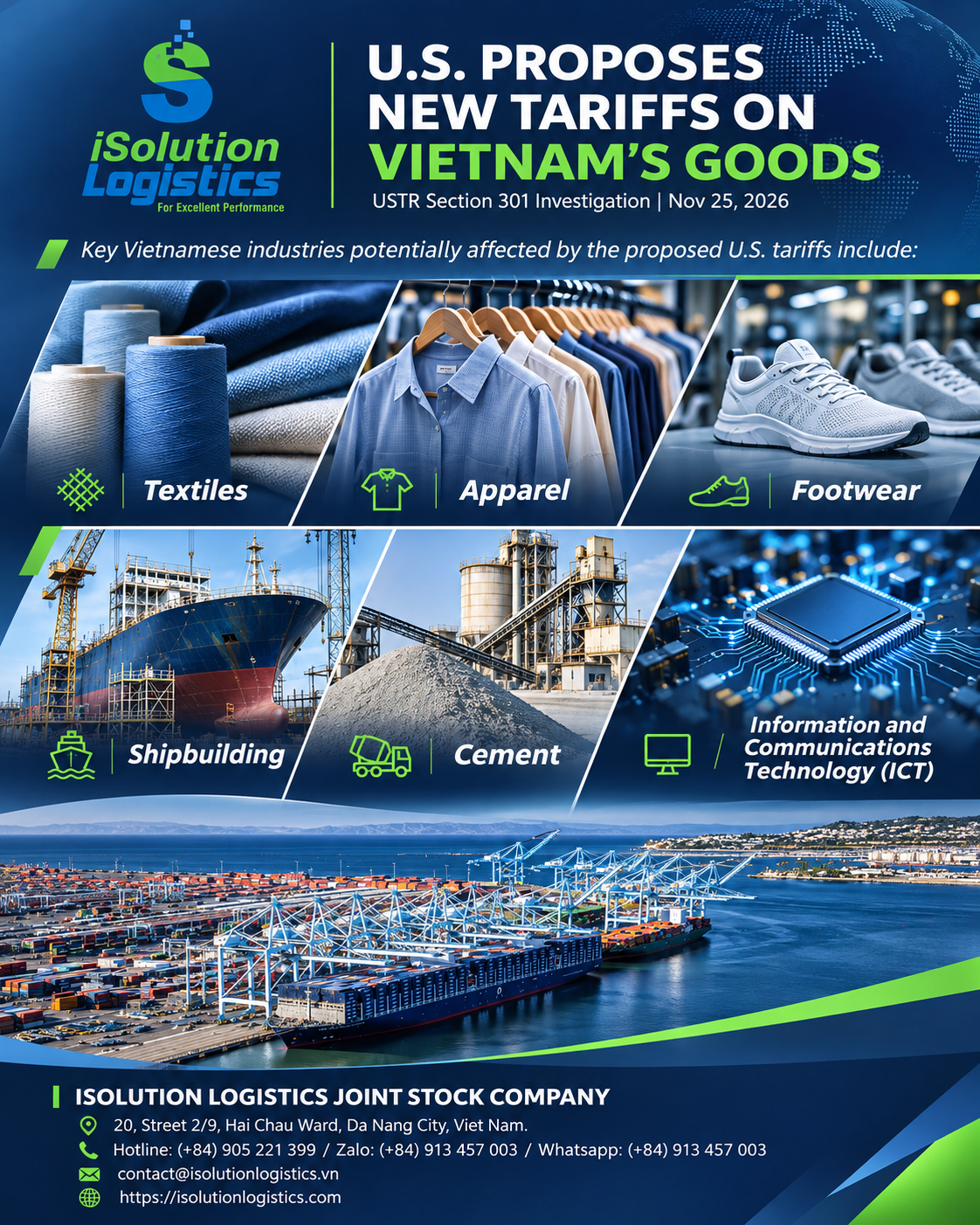
USTR determined under Section 301 of the Trade Act of 1974 that Vietnam’s acts, policies and practices on structural excess capacity and production in manufacturing are unreasonable and burden or restrict US commerce. The findings point to sectors such as textiles, apparel and footwear, shipbuilding, cement, and electronics and ICT, among others.
As a result, USTR proposes to consider tariffs of up to 35 percent, net of existing Section 301 tariffs, on all goods of Vietnam, with exemptions for certain goods. The notice says the rate may be adjusted for duties under other Section 301 and Section 232 actions. It also mentions a tariff rate of 20 percent if Vietnam reaches an Agreement on Reciprocal Trade with the United States.
| Item | Detail in the USTR notice |
|---|---|
| Legal basis | Section 301 of the Trade Act of 1974 |
| Subject | Structural excess capacity and production in manufacturing sectors |
| Proposed rate | A ceiling that could reach 35 percent, net of existing Section 301 tariffs |
| Possible adjusted rate | 20 percent if Vietnam reaches an Agreement on Reciprocal Trade with the US |
| Status | Notice of determination and request for comments, not a final decision |
| Docket numbers | USTR-2026-0740 (comments), USTR-2026-0741 (requests to appear) |
Which Goods Are Exempted?
The proposed US tariffs on Vietnam cover all Vietnamese goods except the groups below. The additional duties do not apply to exempted goods.
- Goods already subject to Section 232 tariffs: articles of aluminum, steel and copper, passenger vehicles and light trucks, medium and heavy duty vehicles and their parts, wood products, patented pharmaceutical articles, and semiconductor articles.
- Informational materials such as books, donations, and accompanied baggage.
- Other products listed by HTSUS code in the Annex, such as raw materials, products whose tariffs could disrupt the wider US economy, and goods the US cannot produce in sufficient quantity.
- Certain agglomerated iron ores and concentrates.
The Annex runs from page 22 to page 129 of the notice. Importantly, the exemption covers only goods that customs properly classifies under the listed HTSUS codes. Also, some codes carry scope limitations.
Are Frozen Shrimp and Pangasius Exempted From US Tariffs on Vietnam?
No. Our review of the Annex found no HTSUS code from chapter 03, which covers fish and crustaceans. Therefore, frozen shrimp (HS 0306) and pangasius fillets (HS 0304) do not receive an exemption, and they fall within the proposed scope. The notice does not name them. However, the proposal applies to all goods of Vietnam that lack an exemption.
Meanwhile, other major export lines show a mixed picture:
| Product group | HS chapter | Status in the Annex |
|---|---|---|
| Frozen shrimp | 0306 | Not listed, within proposed scope |
| Pangasius and fish fillets | 0304 | Not listed, within proposed scope |
| Textiles | 50 to 59 | No codes found in the Annex |
| Apparel | 61, 62 | No codes found in the Annex |
| Footwear | 64 | No codes found in the Annex |
| Wood products | 44 | Exempted if already under Section 232 tariffs |
| Electronics and machinery | 84, 85 | Partly listed, check each 8 digit code |
Antidumping and countervailing duties on seafood run separately from Section 301, and this table does not change them. Therefore, check them with a customs broker or trade lawyer before you quote a landed cost.
Key Dates for Comments and Hearing
USTR is asking for public comment on the products to be covered, the rate of duty, and how the US Vietnam trade framework should be reflected. The dates are:
| Date | Step |
|---|---|
| January 5, 2027 | Deadline for written comments and requests to appear at the hearing |
| January 25, 2027 | Public hearing at the US International Trade Commission, Washington, DC |
Exporters can submit comments through the USTR portal at comments.ustr.gov under docket USTR-2026-0740.
What Should Exporters Do About US Tariffs on Vietnam?
ISOLUTION LOGISTICS JSC recommends these steps while the US tariffs on Vietnam proposal is open:
- First, match the 8 digit HTSUS code of each product against the Annex.
- Next, rerun landed cost under two scenarios: a 35 percent ceiling and a 20 percent rate.
- Then, agree early with US buyers on who bears any new duty and on shipment timing.
- Also, keep documents clean, including country of origin evidence, because duty depends on origin.
- Finally, watch January 5 and January 25, 2027, and the final notice after the hearing.
In short, the tariff is not final, but exporters who check their codes and costs now can keep reefer shipments to the US from sudden cost shocks.
📌 ISOLUTION LOGISTICS JOINT STOCK COMPANY
🏡 20, Street 2/9, Hai Chau Ward, Da Nang City, Viet Nam.
📞 (+84) 905 221 399 / Zalo: (+84) 913 457 003 / Whatsapp: (+84) 913 457 003
📪 contact@isolutionlogistics.vn
🌏 https://isolutionlogistics.com
📌 ISOLUTION LOGISTICS LAO CO., LTD.
🏡 No. 569, Cluster 37, DongPhosy Village, Hatsaiphong District, Vientiane, Lao PDR
Want more details?
Contact us directly via WhatsApp, Zalo or WeChat for immediate assistance.
References:
- USTR, Notice of Determination and Request for Comments Concerning Proposed Action in the Section 301 Investigation of Acts, Policies, and Practices of Vietnam Relating to Structural Excess Capacity and Production in Manufacturing Sectors
- USTR public comments portal
Keep Reading: