This is Part 5 of ISOLUTION LOGISTICS’ Incoterms 2020 series. Part 1 covered EXW and FCA, Part 2 covered CPT and CIP, Part 3 covered CFR and CIF, and Part 4 covered DAP, DPU and DDP. This part covers the last two rules: FAS and FOB Incoterms 2020. Both are sea-only rules. Under both, the seller delivers at the named port of shipment and clears the goods for export. However, the delivery point differs. In FAS it is alongside the ship, while in FOB it is on board the vessel.
IN THIS ARTICLE
What Are FAS and FOB Incoterms 2020?
FAS (Free Alongside Ship) means the seller delivers the goods when they are placed alongside the ship. The buyer nominates the ship. The goods may sit on a quay or on a barge, at the named port of shipment. Alternatively, the seller can procure goods already delivered that way.
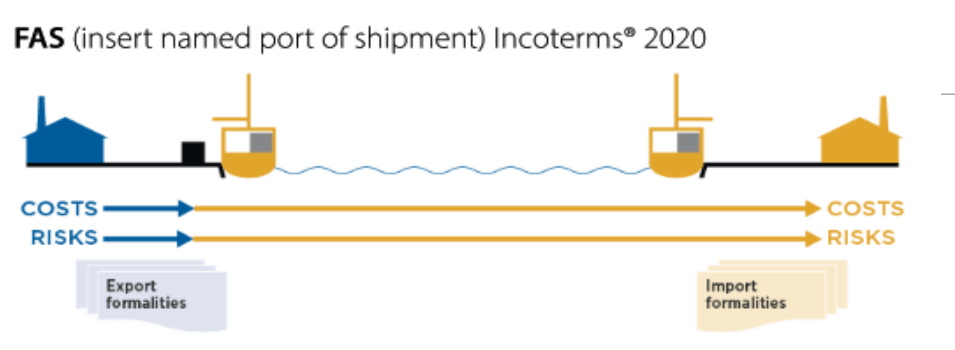
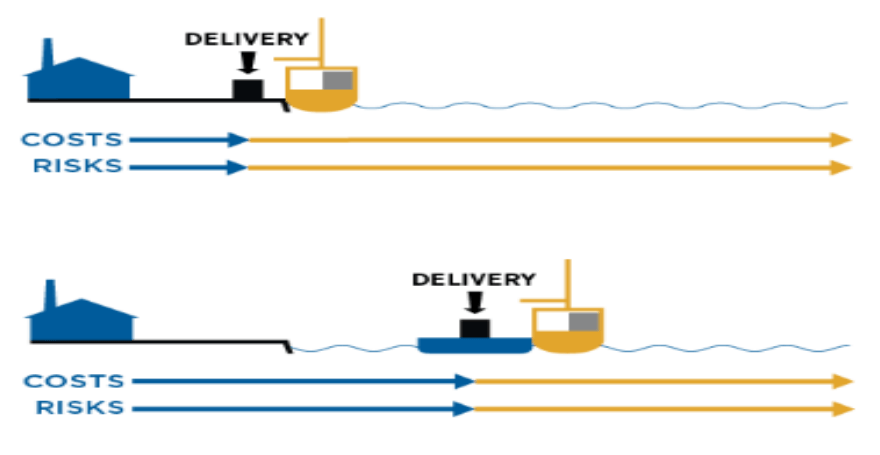
The risk of loss or damage transfers when the goods are alongside the ship. In addition, the buyer bears all costs from that moment onwards.
FOB (Free on Board) means the seller delivers the goods on board the vessel nominated by the buyer. This happens at the named port of shipment. Alternatively, the seller can procure goods already delivered that way. Note that FOB Incoterms 2020 may only be used for sea or inland waterway transport.
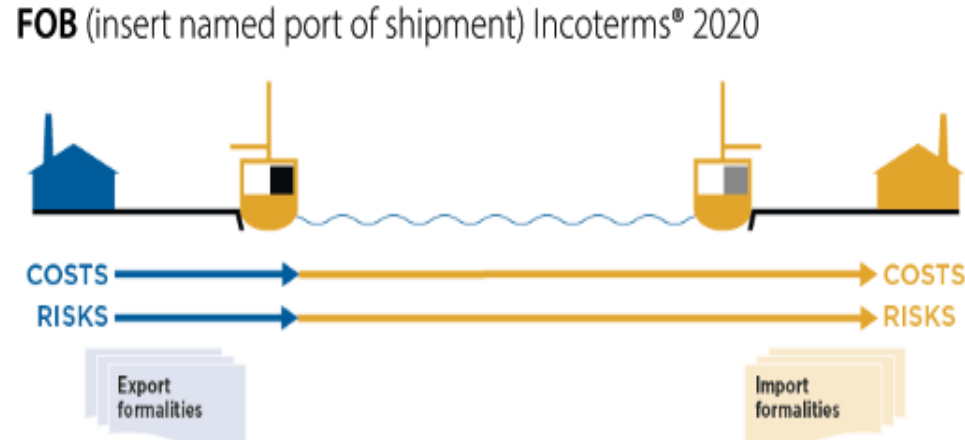
Likewise, FAS Incoterms 2020 is limited to sea or inland waterway transport.
Where Cost and Risk Pass in FAS and FOB Incoterms 2020
In FAS and FOB Incoterms 2020, the delivery point is also the point where risk passes. In addition, costs change hands at that point.
- FAS: the risk passes when the goods are alongside the ship. The buyer bears all costs from then on.
- FOB: the risk passes when the goods are on board the vessel. It does not pass when the goods cross the ship’s rail.
Therefore, the seller should name the loading point at the port of shipment as clearly as possible. The costs and risks up to that point are for the seller’s account. Also, handling charges at the port may vary with local port practice.
In both rules, the seller clears the goods for export, where applicable. However, the seller does not clear them for import.
FAS vs FOB at a Glance
| FAS | FOB | |
|---|---|---|
| Transport mode | Sea or inland waterway only | Sea or inland waterway only |
| Seller delivers | Alongside the ship nominated by the buyer, on a quay or a barge | On board the vessel nominated by the buyer |
| Risk passes to buyer | When the goods are alongside the ship | When the goods are on board the vessel |
| Export clearance | Seller | Seller |
| Import clearance | Buyer | Buyer |
In price terms, FAS equals EXW plus the cost of moving the goods to the port and the export formalities. CFR equals FOB plus freight, as Part 3 explains.
Why Containers Should Use FCA Instead
FAS and FOB Incoterms 2020 only work when the goods are delivered alongside or on board the ship. However, containers are usually handed to the carrier at a terminal. They do not go alongside the ship first. In that case, our training material says the FCA rule should be used. It sums this up as: FCA is more appropriate for containerized cargo than FOB.
For the container version, read Part 1 on EXW and FCA.
Real-World Example: Reefer Container of Seafood from Da Nang to Los Angeles
Below, iSolution Logistics takes a real-world example based on shipments we have handled to illustrate how FAS and FOB work.
A seafood exporter in Da Nang sells a reefer container of frozen seafood to an importer in the United States. The port of shipment is Da Nang Port and the destination is Los Angeles. It is a sea shipment between two seaports, so FAS and FOB Incoterms 2020 both fit the route.
If the contract says FAS Da Nang Port Incoterms 2020: the exporter clears the goods for export. Then it delivers them alongside the ship nominated by the importer at Da Nang Port. From that moment the importer carries the risk and bears all costs. In addition, the importer clears the goods for import in Los Angeles.
If the contract says FOB Da Nang Port Incoterms 2020: the exporter clears the goods for export and delivers them on board the vessel nominated by the importer at Da Nang Port. The risk passes when the goods are on board the vessel. The importer then clears the goods for import in Los Angeles.
Where the risk moves: in FAS it moves at the ship’s side. In FOB it moves on board. In both cases it moves at Da Nang Port, not when the goods reach Los Angeles.
A caution for containers: a reefer container is normally handed to the carrier at a terminal, not placed alongside the ship. As the section above explains, FCA is the more appropriate rule for containerized cargo. However, many buyers still ask for FOB, so agree exactly where the risk passes before the contract is signed.
Documents to Prepare
- Commercial invoice and packing list
- Export declaration (seller)
- Import declaration (buyer)
How iSolution Logistics Can Help
- Customs procedures: we support consultation throughout customs and clearance procedures for goods.
- Cold chain cargo: handling cold chain shipments needs accuracy in customs procedures, tax settlement, certificates of origin (C/O) and regulatory permits. We provide professional services so goods are delivered on time, to the right destination, and at an optimal cost.
- Tracking: we monitor the transportation process to support safety and timely delivery.
Learn more on our Reefer Shipping, Multimodal Transport Service and Customs Brokerage & Clearance pages.
Frequently Asked Questions
What is the difference between FAS and FOB? FAS vs FOB comes down to the delivery point. Under FAS the seller delivers alongside the ship. Under FOB the seller delivers on board the vessel.
Who carries the risk under FOB? The seller carries it until the goods are on board the vessel. After that the buyer does.
Can FOB be used for containers? The rule is written for goods delivered on board. For containers handed over at a terminal, FCA is the more appropriate rule.
📌 ISOLUTION LOGISTICS JOINT STOCK COMPANY
🏡 20, Street 2/9, Hai Chau Ward, Da Nang City, Viet Nam.
📞 (+84) 905 221 399 / Zalo: (+84) 913 457 003 / Whatsapp: (+84) 913 457 003
📪 contact@isolutionlogistics.vn
🌏 https://isolutionlogistics.com
📌 ISOLUTION LOGISTICS LAO CO., LTD.
🏡 No. 569, Cluster 37, DongPhosy Village, Hatsaiphong District, Vientiane, Lao PDR
Want more details?
Contact us directly via WhatsApp, Zalo or WeChat for immediate assistance.
References:
Keep Reading:
- DAP, DPU and DDP Incoterms 2020: Who Pays and Who’s Responsible at Each Stage
- CFR and CIF Incoterms 2020: Who Pays and Who’s Responsible at Each Stage
- Vietnam Laos Border Gates for Cross Border Trucking: Lao Bao, Cau Treo, Nam Giang and Bo Y
- Transit Cargo to Cambodia via Vietnam: Documents and Border Gates
- EXW and FCA Incoterms 2020: Who Pays and Who’s Responsible at Each Stage
- CPT and CIP Incoterms 2020: Who Pays and Who’s Responsible at Each Stage
- Cross-Border Infrastructure: Vietnam, Laos & Cambodia
- Cargo Seals Explained: Temporary Seals vs Official Carrier Seals in Container Shipping
- Differences Between Transit Cargo and Cross-Border Cargo?