
How does a reefer container work? A reefer container is an insulated intermodal container with a built in cooling system. It holds a steady temperature for weeks. Therefore, it protects perishable cargo such as fruit, meat, seafood and medicine. It follows the same vapor compression principle as a home refrigerator. However, it needs careful coordination between the cooling unit, the airflow, the power source and the controller. Below, ISOLUTION LOGISTICS explains each part in plain language.
IN THIS ARTICLE
- What is a reefer container?
- How does a reefer container work? The five main parts
- How does a reefer container work? Airflow inside the box
- Where a reefer container gets its power
- Reefer container temperature range and control
- Reefer container alarm codes: how to read and handle them
- Reefer container shipping from Vietnam to the USA
What Is a Reefer Container?
A reefer container, also called a refrigerated container, has a standard size. The most common sizes are 20 feet and 40 feet High Cube. Also, it has thick insulation and an integrated cooling system. In addition, it is a key link in the cold chain. The cold chain needs continuous temperature control from the point of departure to the destination. So how does a reefer container work in practice? Simply, it keeps the cargo at the set temperature, so food and medicine stay safe.
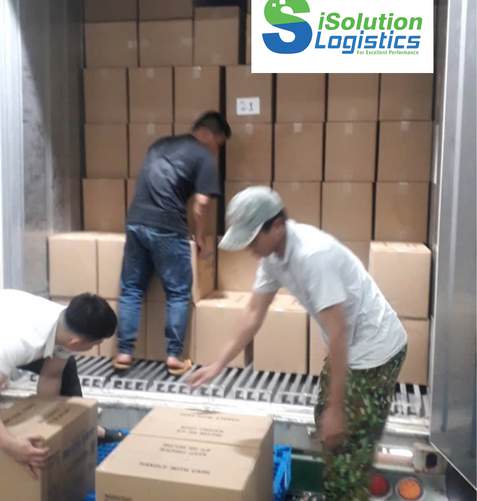
How Does a Reefer Container Work? The Five Main Parts
A reefer container has five main parts. Together, they keep the temperature at the set level.
- Cooling unit: It includes the compressor, the condenser coil, the evaporator coil and the fans. It holds the temperature at the set level.
- Insulated walls, floor and roof: Polyurethane insulation limits the heat exchange with the outside air.
- T bar floor: Grooves in the floor guide the air. Cold air flows under and around the cargo, then returns to the cooling unit.
- Controller: Staff set the temperature and the ventilation here. It also reads the sensors and gives an alarm when something is wrong.
- Power supply: The power comes from the ship, from a power station at the port, or from a genset on the road.
In short, the cooling unit makes the cold. Then the insulation keeps it inside. Next, the T bar floor spreads it. Meanwhile, the controller watches it, and the power supply keeps everything running.
How Does a Reefer Container Work? Airflow Inside the Box
Air moves in a loop inside the container. First, the T bar floor has grooves that guide the cold air. Then the air circulates under and around the cargo. After that, it returns to the cooling unit.
Where Does a Reefer Container Get Its Power?
A reefer container has its own cooling system, but the system needs electricity. The power comes from three places:
- The ship, during the sea voyage.
- A power station at the port.
- A genset, during road transport.
In this case, a genset is a generator that runs on diesel. It is mounted directly on the container.
Reefer Container Temperature Range and Control
Most standard reefer containers work from minus 30 °C to plus 30 °C. Therefore, that range covers chilled, fresh and frozen cargo. Also, super freezer units can reach minus 60 °C to minus 70 °C. The set temperature depends on the cargo. For example, medicine is usually kept at 2 to 8 °C. In contrast, frozen cargo needs a lower temperature.
| Type of unit or cargo | Typical temperature |
|---|---|
| Standard reefer container | Minus 30 °C to plus 30 °C |
| Super freezer container | Minus 60 °C to minus 70 °C |
| Medicine | 2 to 8 °C |
| Frozen cargo | Lower than medicine, set by the cargo |
Celsius or Fahrenheit: avoid unit mistakes
You can use either °C or °F. When you book, tell the carrier clearly which unit and which temperature you want. The carrier records the temperature on the Booking Confirmation and on the bill of lading (B/L). Then it sets the cooling unit to match. The two units look different, so check every document with care. For example, minus 18 °C equals about minus 0.4 °F, not minus 18 °F. However, if the units are mixed up, the real temperature may not protect the cargo.
Reefer Container Alarm Codes: How to Read and Handle Them
The controller of a reefer container shows operating data and alarm codes. These codes help the operator spot problems early. Also, a chart on the container lists the controller codes and the alarm codes, each with a short description.
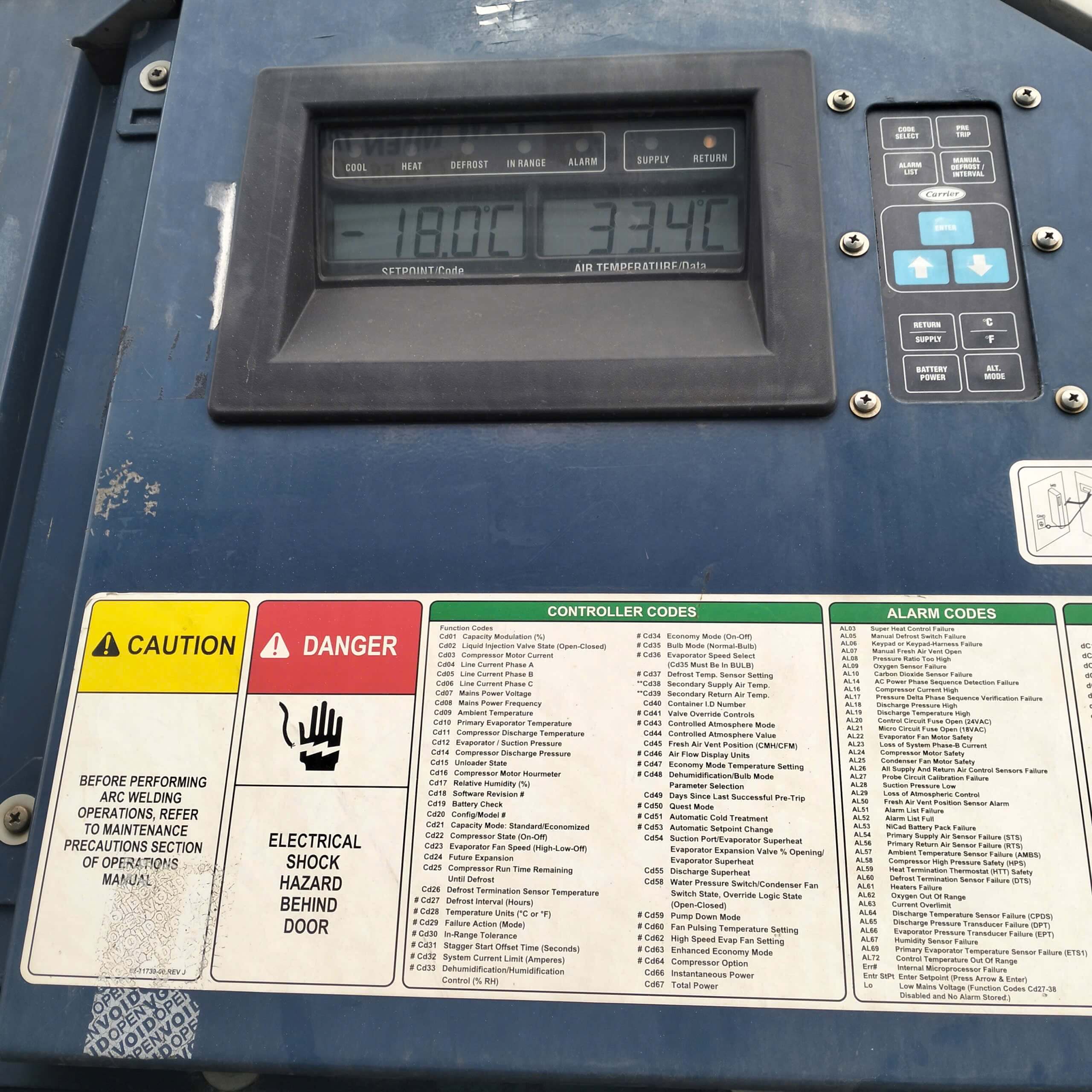
How to read an alarm code
When an alarm appears, the operator opens the ALARM LIST on the control panel. Then the operator checks the code against the chart.
How iSolution Logistics handles a reefer alarm
iSolution Logistics once met this case while handling cargo in a reefer container. The display below showed code AL53 next to a temperature reading of minus 10.5 °C. According to the chart on the unit, AL53 means NiCad Battery Pack Failure, a fault in the NiCad battery pack of the unit.
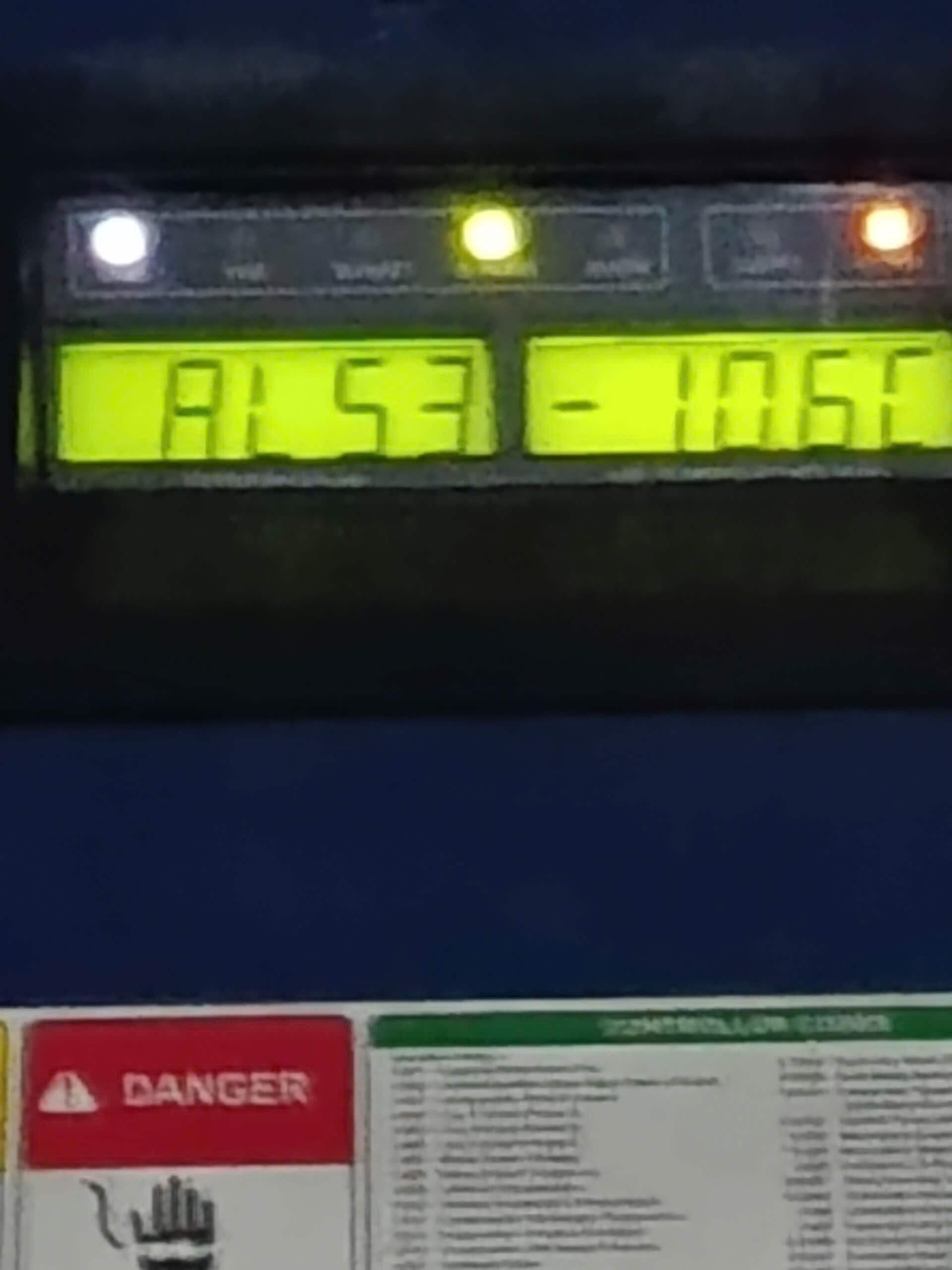
In this case, iSolution Logistics worked together with the driver and the carrier’s technical team. First, our staff ask the driver for the code on the display. They also note the unit status and the temperature. Next, they contact the carrier’s technical team. They give the exact code (AL53), the screen status, the set temperature, the real temperature and the running status if known. Then the technicians guide the driver through the checks that the carrier requires. If the problem cannot be fixed remotely, or if it may affect the cargo, the carrier can send a technician to the container.
In addition, following expert guidance limits wrong actions and avoids new problems. After the fix, our staff update the driver and the carrier. They also check whether the alarm returns and whether the temperature stays within the limit. If the temperature keeps moving or the fault is not fixed, they inform the technical team at once.
Reefer Container Shipping from Vietnam to the USA with iSolution Logistics
Are you looking for safe, professional reefer container shipping to the United States? iSolution Logistics supports your shipping from Vietnam to USA, from the factory to the port. We also connect with the international ocean freight route.
Our reefer container shipping services
- FMC certification #033501: It meets the licensing requirement for ocean transport to the United States. It also supports compliance with the applicable shipping rules.
- Professional reefer trucking: We coordinate vehicles from the factory to the port. We focus on the storage temperature, the handover schedule and the cargo risk.
- Documents and customs support: We help with the Health Certificate, the C/O Form B, export customs procedures and other documents for each shipment.
- End to end tracking: We update the status from container pick up and loading at the factory to inland transport. We continue until the container is handed over at the port and loaded on the ship to the USA.
- 24/7 customer support: Our team works with drivers, carriers and technicians to solve problems fast. This helps protect the schedule and the cargo quality.
Learn more about our reefer shipping service, and tell us the temperature you need. Then we will plan the shipment with you.
📌 ISOLUTION LOGISTICS JOINT STOCK COMPANY
🏡 20, Street 2/9, Hai Chau Ward, Da Nang City, Viet Nam.
📞 (+84) 905 221 399 / Zalo: (+84) 913 457 003 / Whatsapp: (+84) 913 457 003
📪 contact@isolutionlogistics.vn
🌏 https://isolutionlogistics.com
📌 ISOLUTION LOGISTICS LAO CO., LTD.
🏡 No. 569, Cluster 37, DongPhosy Village, Hatsaiphong District, Vientiane, Lao PDR
Want more details?
Contact us directly via WhatsApp, Zalo or WeChat for immediate assistance.
References:
Keep Reading:
- FAS and FOB Incoterms 2020: Who Pays and Who’s Responsible at Each Stage
- DAP, DPU and DDP Incoterms 2020: Who Pays and Who’s Responsible at Each Stage
- CFR and CIF Incoterms 2020: Who Pays and Who’s Responsible at Each Stage
- Vietnam Laos Border Gates for Cross Border Trucking: Lao Bao, Cau Treo, Nam Giang and Bo Y
- Transit Cargo to Cambodia via Vietnam: Documents and Border Gates
- EXW and FCA Incoterms 2020: Who Pays and Who’s Responsible at Each Stage
- CPT and CIP Incoterms 2020: Who Pays and Who’s Responsible at Each Stage
- Cross-Border Infrastructure: Vietnam, Laos & Cambodia
- Cargo Seals Explained: Temporary Seals vs Official Carrier Seals in Container Shipping
- Differences Between Transit Cargo and Cross-Border Cargo?