
Pre cooling a reefer container load means cooling the cargo to its carrying temperature before you load it. Many shippers think that the container will cool the goods after loading. It will not. A reefer container keeps the temperature of cargo that is already cold. This guide explains what pre cooling a reefer container means, why it matters, how to do it, and when other rules apply.
IN THIS ARTICLE
- What is pre cooling for a reefer container
- Why a reefer container cannot cool warm cargo
- What happens if you load without pre cooling
- How to pre cool cargo before loading
- Should you pre cool the empty container too
- Frozen cargo: pre freeze, not pre cool
- Checklist before loading a reefer container
- FAQ: pre cooling reefer container
- Reefer container shipping from Vietnam to the USA
What Is Pre Cooling for a Reefer Container?
The term pre cooling can mean three different things. Mixing them up causes many problems:
- Cargo pre cooling: You cool the product to the carrying temperature before loading. This is needed for chilled goods such as fruit, vegetables, fresh seafood, fresh meat and milk.
- Pre freeze: For frozen cargo, you freeze the product down to the required temperature before loading.
- Container pre cooling: You run the unit on the empty box to reach the set temperature before loading. Guidance on this step is not the same everywhere.
Why a Reefer Container Cannot Cool Warm Cargo
Shipping lines stress one rule. A reefer container is designed to hold the set temperature. It is not designed to bring warm cargo down fast. There are two main reasons:
- Fresh produce carries field heat. After harvest, fruit and vegetables still hold heat and keep breathing. Pre cooling removes this heat early and slows the water loss.
- The air does not reach the core of each carton. Cold air moves from the T-floor, up through the gaps between the packages, and back to the unit. This is enough to remove heat that comes in from outside. However, it is not enough to cool a tight and warm load quickly.
Because of this, a load that is already at the right temperature stays stable for the whole trip. A warm load does not.
What Happens If You Load Without Pre Cooling a Reefer Container?
A load that is warmer than the set temperature is called a hot load. Loading cargo that is not pre cooled puts a very high demand on the unit. The result can include:
- Damage from water loss: Many perishable goods lose water and spoil faster.
- An overloaded unit: The unit works hard to remove heat, and this can lead to a breakdown.
- An unstable temperature: It can take a long time before the temperature settles, and the cargo may already be damaged by then.
- Condensation: If you open the door while the unit runs, warm and humid air enters. The moisture condenses on the walls and on the cargo.
The temperature chart can also hide the problem. For this reason, see our guide to reefer cargo damage when the container temperature is normal.
How to Pre Cool Cargo Before Loading a Reefer Container
- Confirm the carrying temperature. Each cargo has its own value. Do not use one temperature for all goods.
- Cool the cargo in a cold room. Wait until the core of the product reaches the target, not only the surface.
- Hold the temperature until loading. Do not leave pallets in the hot sun while the truck waits.
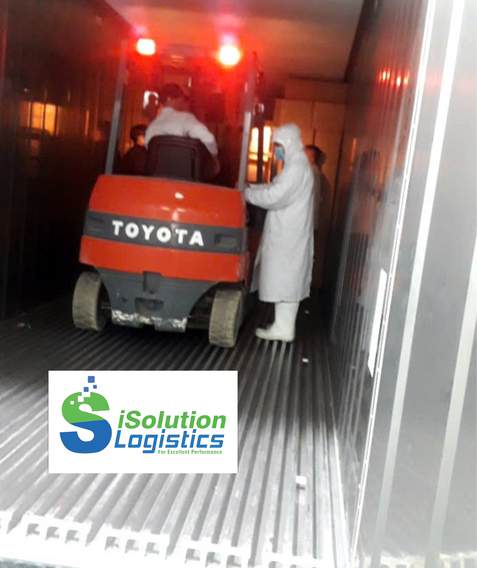
- Load fast. Keep the door open for a short time, so warm and humid air does not enter.
- Switch off the unit while the door is open. If the unit runs with the door open, it pulls warm and humid air in instead of cooling the cargo.
- Use a genset on long road trips. The container needs power on the road too. See our guide to reefer container power failure.
- Keep the air path open. Use pallets, leave space at the walls and the roof, and do not cover the T-floor.
Should You Pre Cool the Empty Container Too?
This is the most confusing point, because guidance differs. Some operators avoid pre cooling the empty box. They worry that the cargo can get wet or deform when loading in an open place. They make an exception when you load from a cold store through a cold tunnel, which is a closed path between the cold store and the container door.
Other operators advise setting the temperature and running the unit for about 30 minutes before loading. This avoids a thermal shock when warm walls meet cold cargo. However, pre cooling the empty container in a hot and humid open area can cause water drops on the packaging when cold cargo comes out of the store.
In practice, follow the booking instructions of your shipping line. If you need container pre cooling, tell the booking team early. With a cold tunnel, pre cooling the box makes sense. In a hot and humid open area, ask the line first.
Frozen Cargo: Pre Freeze, Not Pre Cool
For frozen cargo, the cargo must be frozen before it enters the container, because a reefer container is not a freezer. Frozen food is usually carried at -18°C or colder. Some products, such as ice cream, need an even lower temperature, so follow the instruction of the producer.
Frozen cargo also needs the fresh air vent closed. In contrast, fresh produce needs controlled ventilation. Learn more in our guide to how a reefer container works.
When can cargo skip pre cooling?
Most perishable cargo needs pre cooling. A few products are cold sensitive and follow a special program, for example some tropical fruit. Use these exceptions only when:
- You have a written instruction from the shipper or the producer.
- The shipping line confirms the program, including the set temperature and the transit time.
- The voyage is long enough for the unit to bring the cargo to the target temperature.
On the other hand, chilled cargo at a low temperature, around 2°C, must be pre cooled. The unit cannot bring it to that level in a reasonable time. Many medicines also need a stable range of 2 to 8°C, so they need strict control before loading.
Checklist Before Loading a Reefer Container
- The set temperature in the booking is right. Check the unit (°C or °F) and the sign (+ or -).
- The cargo is pre cooled or pre frozen to the right core temperature.
- You checked the cargo temperature with a calibrated thermometer, not only the unit display.
- The container is clean, free of smell, well insulated, and the T-floor and drains are clear.
- The unit passed the pre trip inspection (PTI) and shows no alarm.
- You asked the shipping line if container pre cooling is needed.
- The unit is off while the door is open, and loading is fast, with the pallets not blocking the air.
- For frozen cargo, the fresh air vent is closed. For fresh produce, the ventilation is set to the instruction.
- You have a stuffing condition report with the cargo and temperature at loading.
FAQ: Pre Cooling Reefer Container
Does a reefer container cool warm cargo?
No. A reefer container is built to keep the temperature of cargo that is already at the right level. It is not built to cool warm cargo fast. Loading warm cargo puts a high load on the unit.
Do I need to pre cool the empty reefer container?
It depends. Guidance differs between shipping lines and cold stores. Follow the booking instructions and ask the line before loading.
What is the difference between pre cooling and pre freeze?
Pre cooling brings chilled cargo to its carrying temperature before loading. Pre freeze brings frozen cargo down to its required frozen temperature before loading.
Reefer Container Shipping from Vietnam to the USA with iSolution Logistics
Are you looking for safe, professional reefer container shipping to the United States? iSolution Logistics supports your shipping from Vietnam to USA, from the factory to the port. We also connect with the international ocean freight route.
Our reefer container shipping services
- FMC certification #033501: It meets the licensing requirement for ocean transport to the United States. It also supports compliance with the applicable shipping rules.
- Professional reefer trucking: We coordinate vehicles from the factory to the port. We focus on the storage temperature, the handover schedule and the cargo risk.
- Documents and customs support: We help with the Health Certificate, the C/O Form B, export customs procedures and other documents for each shipment.
- End to end tracking: We update the status from container pick up and loading at the factory to inland transport. We continue until the container is handed over at the port and loaded on the ship to the USA.
- 24/7 customer support: Our team works with drivers, carriers and technicians to solve problems fast. This helps protect the schedule and the cargo quality.
Learn more about our reefer shipping service, and tell us the temperature you need. Then we will plan the shipment with you.
📌 ISOLUTION LOGISTICS JOINT STOCK COMPANY
🏡 20, Street 2/9, Hai Chau Ward, Da Nang City, Viet Nam.
📞 (+84) 905 221 399 / Zalo: (+84) 913 457 003 / Whatsapp: (+84) 913 457 003
📪 contact@isolutionlogistics.vn
🌏 https://isolutionlogistics.com
📌 ISOLUTION LOGISTICS LAO CO., LTD.
🏡 No. 569, Cluster 37, DongPhosy Village, Hatsaiphong District, Vientiane, Lao PDR
Want more details?
Contact us directly via WhatsApp, Zalo or WeChat for immediate assistance.
References:
- IDENTEC Solutions: When a Reefer Unit Warms Up, Understanding Failures and Preventing Losses
- The Swedish Club: Refrigerated Cargoes
Keep Reading:
- Reefer Container Power Failure: What to Do and How to Prevent It
- How Does a Reefer Container Work? Cooling System, Airflow and Power Supply
- FAS and FOB Incoterms 2020: Who Pays and Who’s Responsible at Each Stage
- DAP, DPU and DDP Incoterms 2020: Who Pays and Who’s Responsible at Each Stage
- CFR and CIF Incoterms 2020: Who Pays and Who’s Responsible at Each Stage
- Vietnam Laos Border Gates for Cross Border Trucking: Lao Bao, Cau Treo, Nam Giang and Bo Y
- Transit Cargo to Cambodia via Vietnam: Documents and Border Gates
- EXW and FCA Incoterms 2020: Who Pays and Who’s Responsible at Each Stage
- CPT and CIP Incoterms 2020: Who Pays and Who’s Responsible at Each Stage
- Cross-Border Infrastructure: Vietnam, Laos & Cambodia
- Cargo Seals Explained: Temporary Seals vs Official Carrier Seals in Container Shipping
- Differences Between Transit Cargo and Cross-Border Cargo?